
Low testosterone, explained.
What testosterone does, why it declines, how a real diagnosis is made, and what treatment actually involves. Drawn from FDA labeling and the urology and endocrinology guidelines, without the sales pitch.
Written from FDA labeling, clinical guidelines and the studies cited below. Educational, not medical advice, and not a substitute for talking with a licensed provider. Updated September 2026.

It is a lab diagnosis, not a feeling.
Fatigue, low drive and a shorter fuse have many causes. Low testosterone is confirmed with a blood test, repeated to be sure, alongside symptoms.
Two morning tests.
Levels peak in the morning and swing from day to day, so guidelines call for total testosterone measured on two separate mornings before anyone calls it low.
300 ng/dL is the common line.
The American Urological Association treats a total testosterone below 300 ng/dL, with symptoms, as a reasonable cutoff. Reference ranges vary by lab.
Treatment is supervised, always.
Testosterone is a Schedule III controlled substance. A licensed provider prescribes it, sets the dose, and rechecks your labs on a schedule.
The facts, at a glance.
average yearly decline in total testosterone after about age 30, in population studies of aging men
men age 45 and older in a large US primary-care study had a total testosterone below 300 ng/dL
before guidelines consider a diagnosis of low testosterone
What happens to testosterone after 30?
Published research on aging men suggests total testosterone declines gradually with age, about 1% a year on average after 30. Drag to see the population average at any age. Averages are not a diagnosis; only a blood test gives your number.
On population averages, total testosterone at 42 is about 12% lower than at age 30.
Population averages from published research on age-related decline (Harman 2001). Educational, not your number and not a diagnosis. Nothing you do here is stored or sent anywhere.
What is in the lab panel?
Six markers, each there for a reason. Tap one.
The headline number. Measured in the morning, on two separate days, because levels peak early and vary day to day. Guidelines treat below 300 ng/dL, with symptoms, as low.
Which labs are required, and how often they repeat, is set by your provider. Nothing you tap here is stored or sent.
Where testosterone comes from.
A short loop between the brain and the testes runs the whole system. Treatment works by adding to what the loop produces, which is also why it can quiet the loop itself.
- 1The brain sends the signal
The hypothalamus and pituitary release hormones (GnRH, then LH) that tell the testes to make testosterone.
- 2The testes produce it
Most of a man's testosterone is made in the testes, with a small share from the adrenal glands. Output is highest in the morning.
- 3It does its work
Testosterone supports muscle and bone, red blood cell production, body hair, sex drive, mood and energy. Some of it converts to estradiol, which men need in small amounts too.
- 4The loop closes
When blood levels are high enough, the brain eases off the signal. Testosterone therapy raises blood levels, so the brain's own signal, and sperm production with it, can fall while you are on it.
Who it is for, and who it is not.
Usually a fit
- Adults with symptoms and two low morning tests, evaluated by a licensed provider
- Willing to do follow-up blood work (blood counts, PSA, estradiol) on a schedule
- Comfortable with a weekly self-injection, or a troche that dissolves in the cheek
Not a fit, or needs a closer look
- Men trying to conceive now: testosterone suppresses sperm production, and a provider may discuss enclomiphene instead
- Known or suspected prostate cancer or breast cancer, per FDA labeling
- Untreated severe sleep apnea, very high red blood cell counts, or uncontrolled heart failure or blood pressure: your provider screens for these
- Anyone under 18, and women who are or may become pregnant
A licensed provider makes every prescribing decision from your health history and, where required, your labs. Not everyone is approved, and if you are not, you are refunded in full.
What the first months look like.
- Week 0Labs first
An at-home kit, a Quest Diagnostics draw, or labs you already have from the last 12 months. The panel covers total and free testosterone, blood counts, a metabolic panel, PSA and estradiol.
- Within hoursA provider reviews
Once your results and intake are in, a US-licensed provider reviews them, usually within an hour or two. Not everyone is approved. If you are not, you are refunded in full.
- DaysFirst shipment
The pharmacy prepares your order in 1 to 2 business days on average, then it ships next-day air in plain packaging.
- Weeks 1 to 12The first cycle
A weekly injection or a daily troche, on the dose your provider set. Message your care team with anything: injection technique, side effects, questions.
- About 3 monthsRecheck
Guidelines call for rechecking testosterone and blood counts after starting, then periodically. Your provider adjusts the plan from the numbers, not from guesswork.
What we offer for this.
Every treatment starts with a $0 online visit and ships free, in plain packaging, from a licensed US pharmacy. Prescription only, at the provider's discretion.
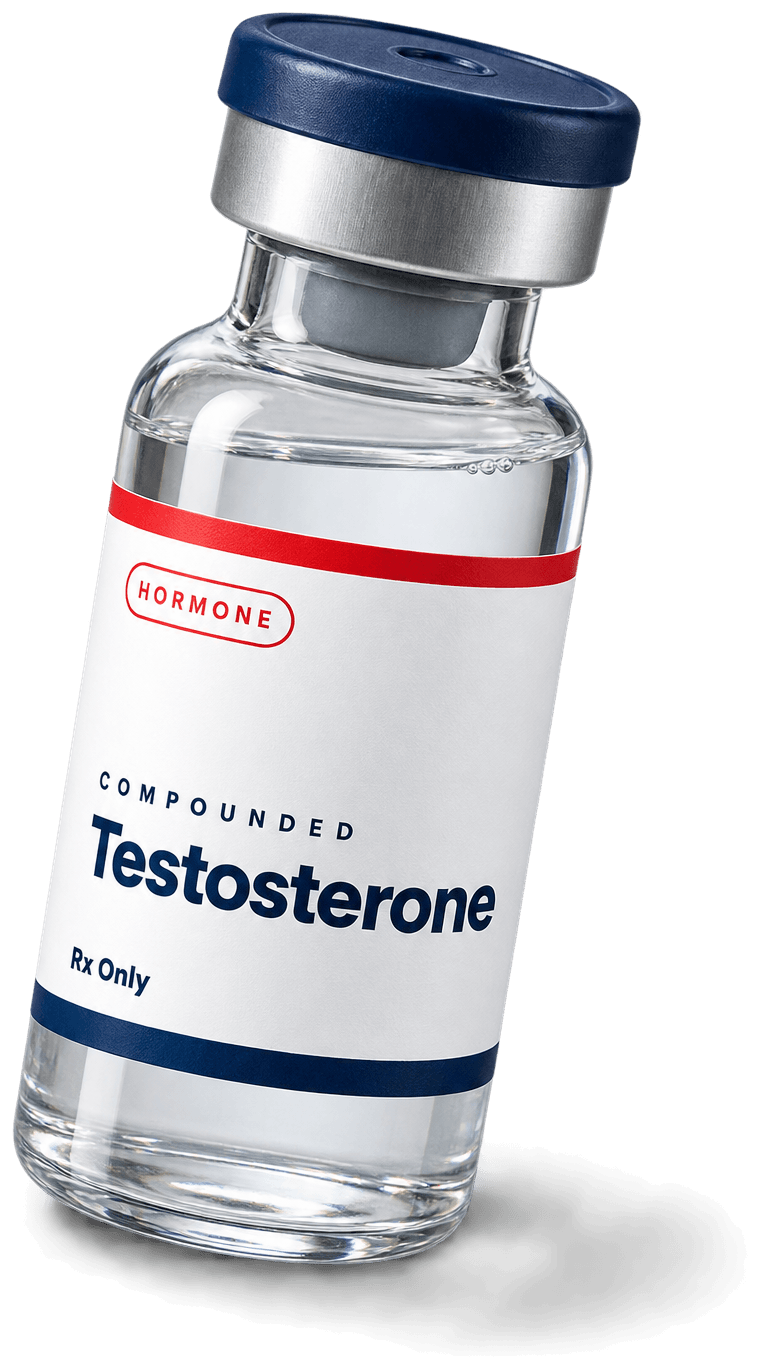
Low testosterone is common after 35 and it is treatable.
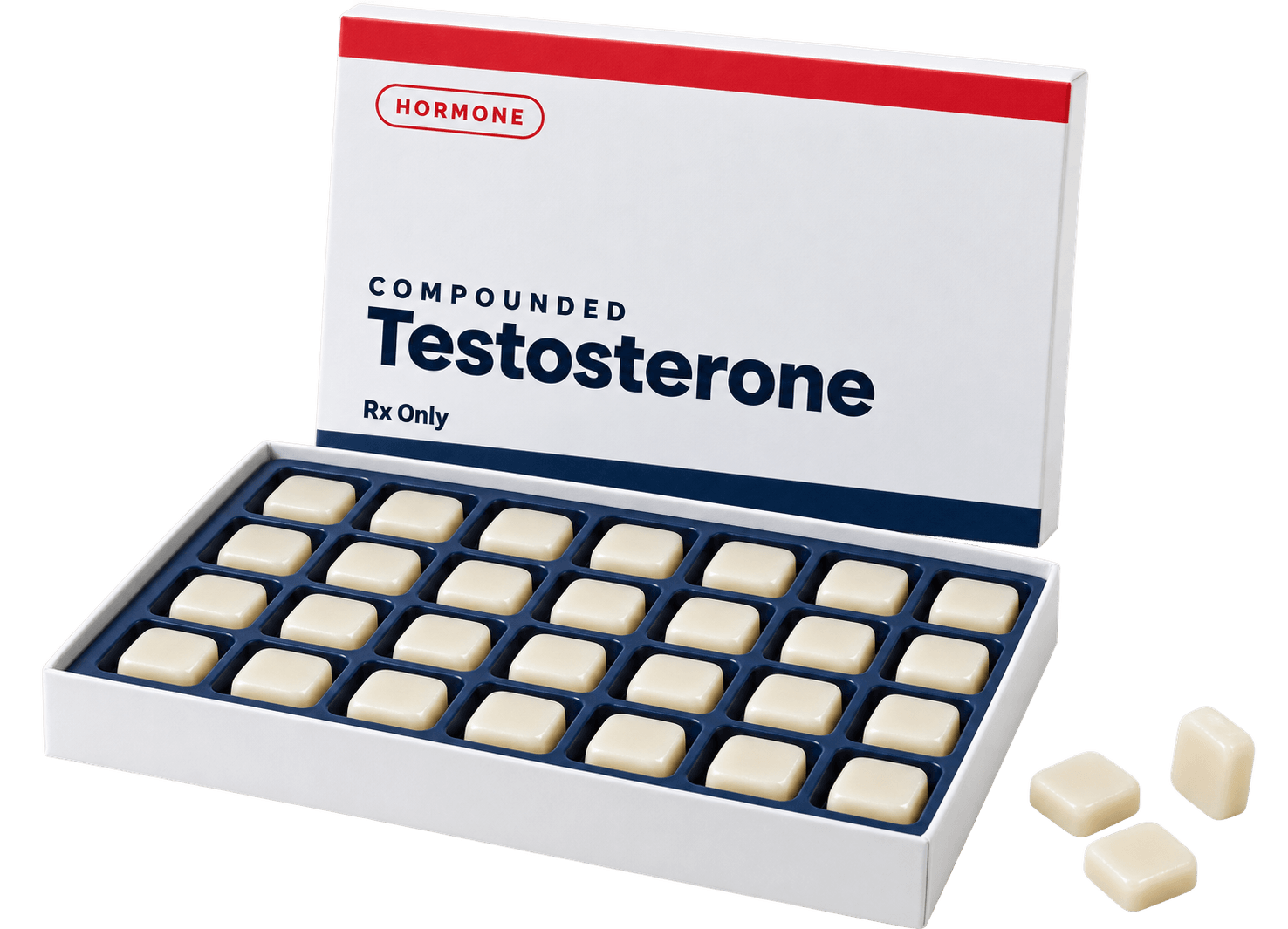
Testosterone therapy without the needle.
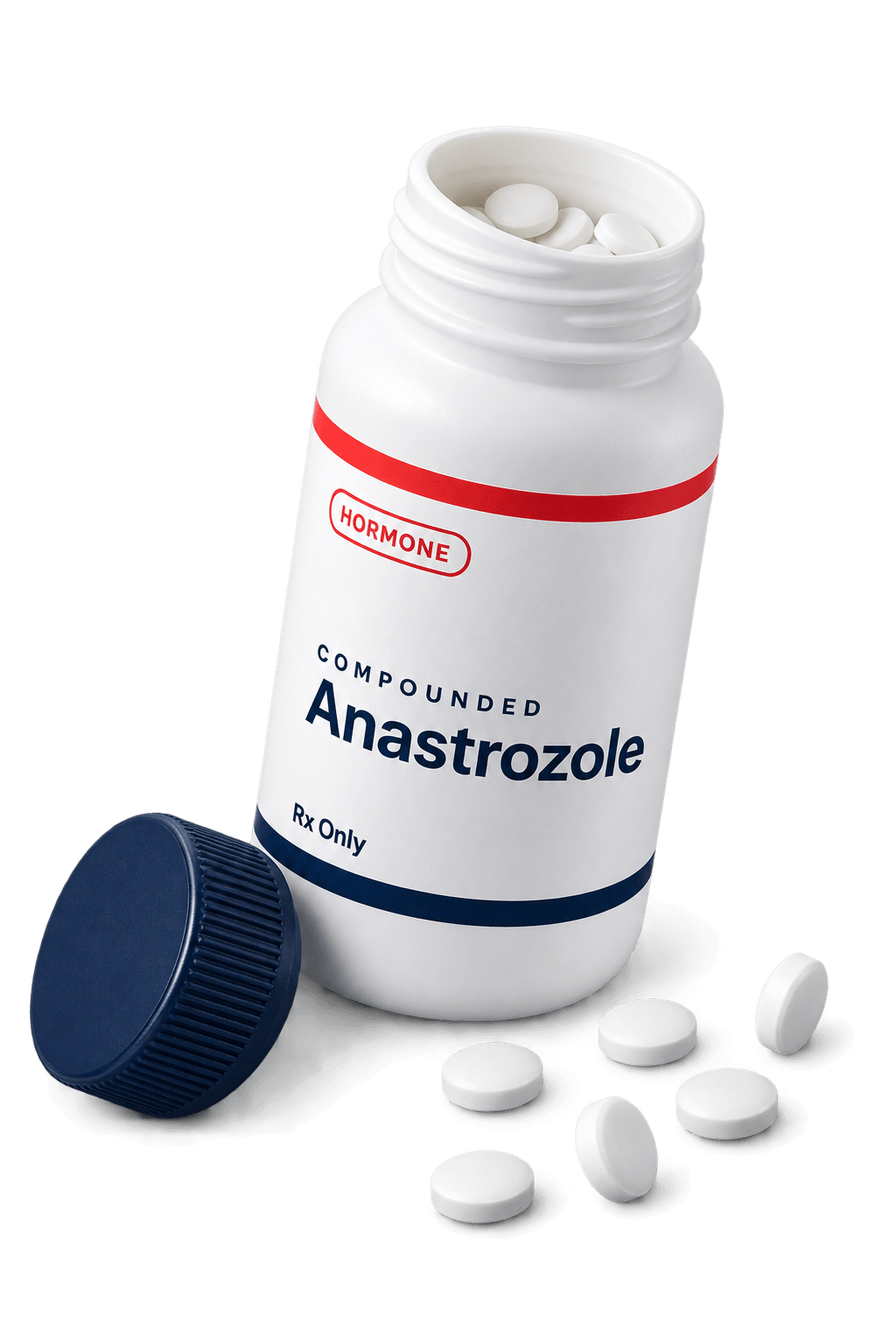
Estrogen management for men on testosterone therapy, guided by labs rather than guesswork.
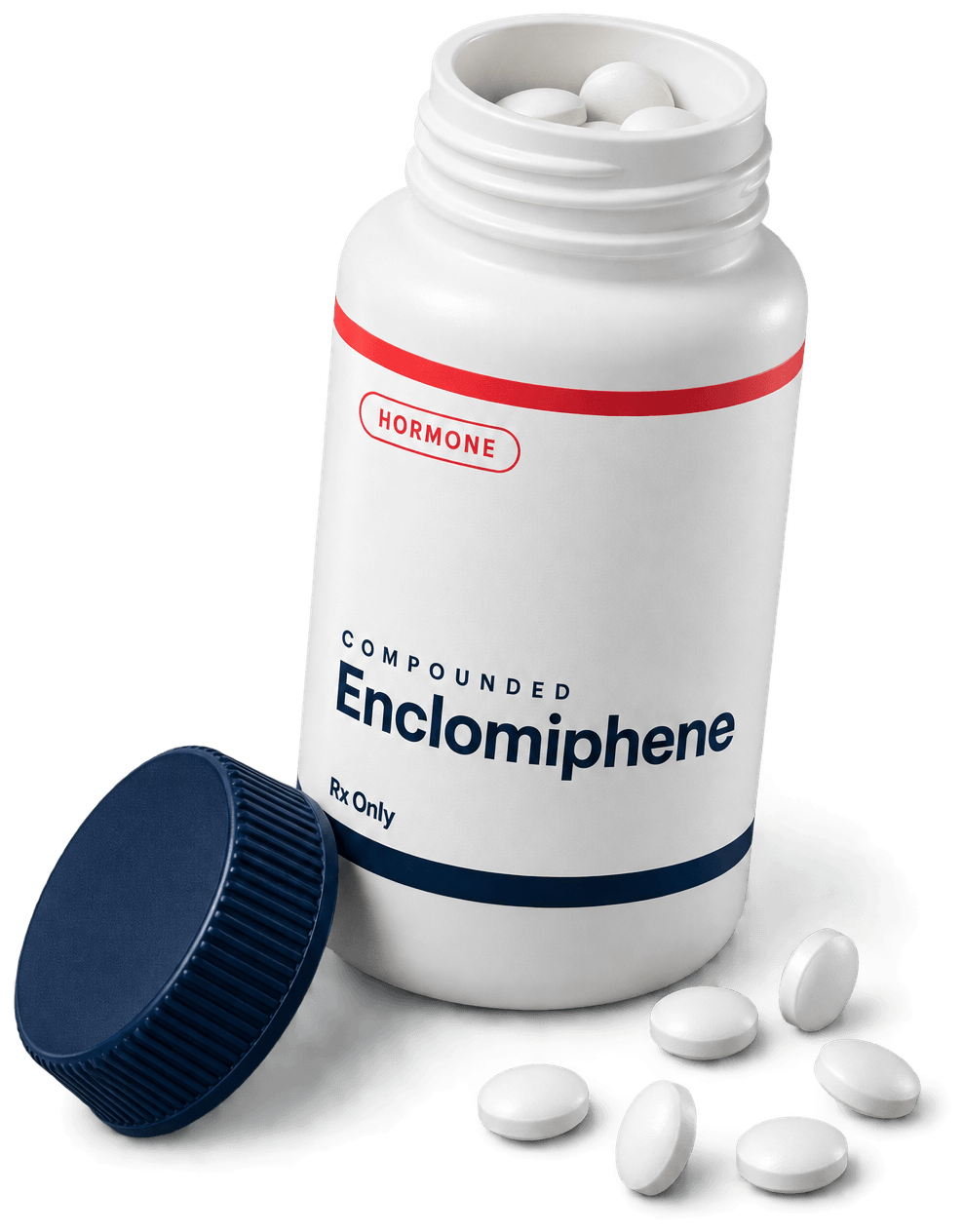
The TRT alternative for men who want to keep their own testosterone production doing the work.
Ask the concierge.
An automated guide to these treatments, one tap at a time. Not a real person and not a doctor; a licensed US provider makes every treatment decision.
Loading the guide. If it does not appear, the treatments are listed above.
The questions people actually ask.
Is testosterone FDA-approved?+
Will I need injections?+
Does TRT affect fertility?+
What does the follow-up look like?+
How long do people stay on it?+
Where this comes from.
- American Urological Association, Evaluation and Management of Testosterone Deficiency (guideline) (opens in a new tab)
- Endocrine Society, Testosterone Therapy in Men With Hypogonadism (2018 clinical practice guideline) (opens in a new tab)
- Harman et al., Baltimore Longitudinal Study of Aging: age-related decline in testosterone (2001) (opens in a new tab)
- Mulligan et al., Prevalence of hypogonadism in males aged at least 45 years: the HIM study (2006) (opens in a new tab)
- FDA, Testosterone information for patients and providers (opens in a new tab)
- DailyMed, testosterone cypionate injection labeling (opens in a new tab)
Written from FDA labeling, clinical guidelines and the studies cited below. Educational, not medical advice, and not a substitute for talking with a licensed provider. Compounded medications offered by Freedom RX are prepared by state-licensed 503A pharmacies for an individual prescription; they are not FDA-approved and have not been evaluated by the FDA for safety, effectiveness or quality. For a medical emergency, call 911.

Ready to get personalized treatment?
Start your online visit. It takes about five minutes, and if a provider does not approve your treatment you are refunded in full.